Suite 3, Ground Floor, The Gateway,
312 St Kilda Road, Southbank, VIC, 3006



How Is the Pelvic Floor Related to Dance?
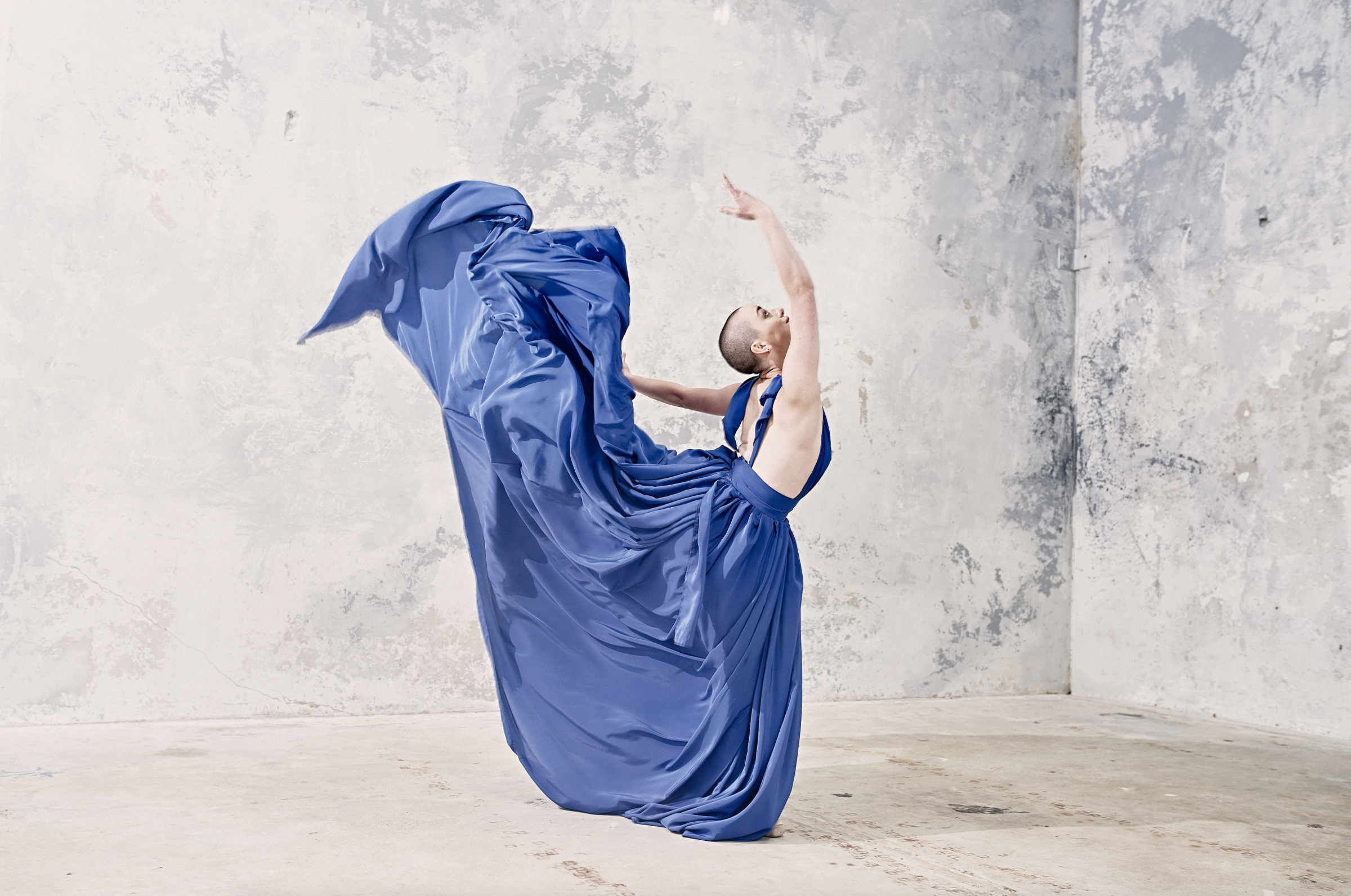
Dancers often begin dancing from a young age, and from this young age, they often receive various cues during their training, such as “suck in”, “brace your core”, “stand tall”, “squeeze”, and “lift up”.
These cues can result in dancers activating and holding their pelvic floor muscles to a point where they become overactive, and this kind of clenching pattern can cause issues down the track. Understanding pelvic floor dysfunction in dancers is an important step towards better performance and long-term well-being.
What Is the Pelvic Floor?
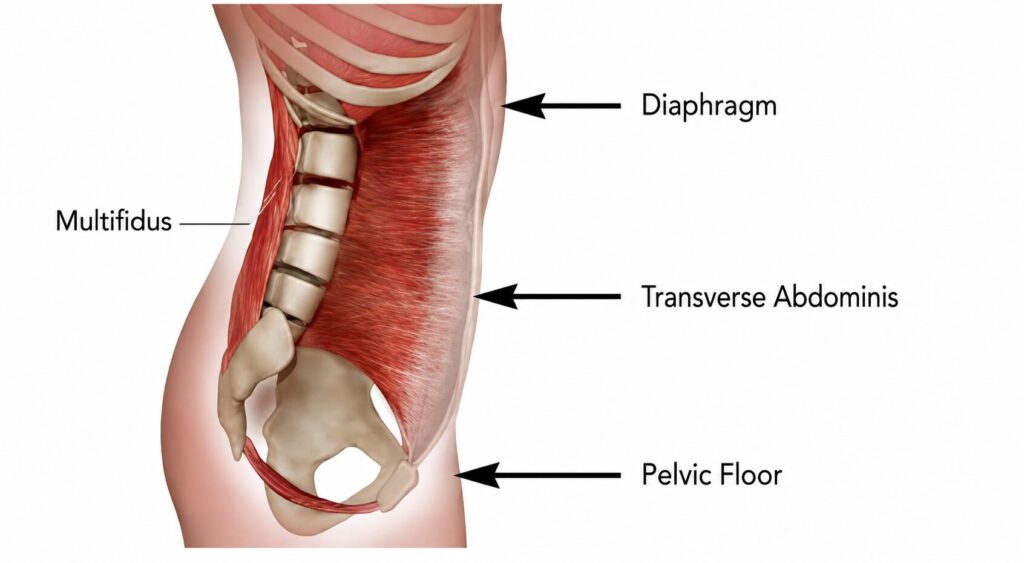
The pelvic floor is a group of muscles and associated connective tissue that sit at the base of the pelvis, forming a hammock that supports the pelvic organs: the bladder, uterus or prostate, and bowel. It runs from the pubic bone at the front, to the coccyx bone at the back and has an integral role in maintaining bladder and bowel continence.
Cues to contract the pelvic floor include “Imagine you are stopping the flow of urine”; “Squeeze around the back passage as if you’re holding in wind”; and “imagine you are squeezing up from back to front”.
To have good pelvic floor function, it is also important to be able to fully relax the pelvic floor muscles.
What Is Pelvic Floor Dysfunction?
Pelvic floor dysfunction occurs when the pelvic floor muscles and connective tissue are not able to function properly, leading to a range of symptoms. The most common symptom that occurs is urinary incontinence, particularly stress urinary incontinence which refers to urine leakage associated with a sneeze, cough, physical activity, or other pressure increases. Individuals can also experience urinary urgency or bowel issues such as constipation or incontinence.
Common symptoms of pelvic floor dysfunction include:
- Stress urinary incontinence (leaking urine with cough, sneeze, jumping or exercise)
- Urinary urgency or increased frequency
- Constipation or difficulty with bowel movements
- Pelvic pain or a sensation of heaviness
- Pain during sexual intercourse
How Does Pelvic Floor Dysfunction Relate to Dancers?
Further research is currently being conducted to investigate the prevalence of pelvic floor dysfunction in female athletes, performers and dancers. Recent evidence shows that 34.6% of female dancers experience urinary incontinence. This is not something that is discussed often, as it can unfortunately seem embarrassing or ‘taboo’. However, it is a common experience for many female athletes, including dancers, and can affect quality of life and performance.
As dance involves a significant amount of jumping, this is considered a high-impact activity. Our dance physiotherapy team understands how high-impact loading can result in pelvic floor dysfunction if there is weakness in those muscles, and therefore an inability to cope with these high loads. However, issues with pelvic floor function in dancers may also be related to an overactive pelvic floor.
As mentioned previously, the way dancers are cued to improve performance may be linked to a subconscious holding pattern, which over time can lead to a hypertonic pelvic floor – where the muscles are being activated too much, causing tension and tightness that is difficult to fully relax. This can result in urinary incontinence, as it causes fatigue of the pelvic floor muscles.
A useful analogy is to imagine you were holding your arms out to the side all day – your shoulders would get pretty sore and tired, right? If someone were to throw a basketball to you, the likelihood of you being able to overcome that fatigue to lift your arms up above your head to catch it is pretty low. The same thing happens with the pelvic floor when the muscles are always working and fatigued – if you jump, sneeze, cough or laugh, it may be too tired to be able to contract effectively against that increase in pressure, which could result in leakage.
What Can Dancers Do to Reduce Pelvic Floor Tension?
One of the best ways to reduce tension when these muscles are overactive is to do a regular “check-in” or “body scan” during the day. This involves scanning your body to see if you are subconsciously holding muscles when you don’t need to be!
Ask yourself throughout the day:
- Are you clenching your jaw?
- Hunching your shoulders?
- Sucking in your tummy?
- Squeezing your thighs together?
- Clenching the pelvic floor (as though you are holding in wind)?
These holding patterns commonly occur together and relate to overactive pelvic floor muscles. By drawing your attention to this throughout the day, and consciously letting go of that tension, we can reset and start to bring down some of that chronic muscle tension.
If you are trying to activate your pelvic floor and can’t feel anything, don’t worry! Many people find it difficult to engage their pelvic floor, as we cannot see these muscles moving like we can for other muscles (e.g. the quads or biceps when we do a squat or bicep curl, respectively). A pelvic floor physiotherapist can help teach dancers how to accurately contract and relax their pelvic floor muscles, to optimise function and reduce the incidence of pelvic floor symptoms.
Pelvic Health and Dance Training: A Bigger Picture
Pelvic floor health is just one piece of the puzzle for dancers. Whether you are working towards your first pointe shoes, considering a pre-pointe assessment, or building strength through our clinical conditioning classes, keeping your whole body in balance is key to longevity in dance. The pelvic floor works as part of your deep core system alongside the diaphragm, transverse abdominis and multifidus muscles. When any one of these is not working optimally, it can affect the others.
When Should You See a Pelvic Health Physiotherapist?
If you are experiencing any of the symptoms listed above, or if you are a dancer wanting to optimise your pelvic floor health and performance, our Pelvic Health service at Performance Medicine is a great first step.
Ready to take the next step? Book an appointment online at our Melbourne or Sydney clinics – no referral needed.
Further Information:
For more information on pelvic floor dysfunction, visit the Continence Health Australia website:
continence.org.au – Female Pelvic Floor Muscles (opens in new tab)
References:
Winder B, Lindegren K, Blackmon A. Prevalence of Urinary Incontinence and Other Pelvic Floor-Related Symptoms in Female Professional Dancers. J Dance Med Sci. 2023;27(1):50-55. doi:10.1177/1089313X231176629
Categories :