
Suite 3, Ground Floor, The Gateway,
312 St Kilda Road, Southbank, VIC, 3006



Strength Training for Dancers: Why Strength Matters More Than Flexibility
By Emily McLean
Stand up and hug your knee as close to your chest as you can. Now let go. Did your knee drop down a little? That small drop is the gap between your range and your strength. Your hip and knee can bend to their full range with the help of your arms, but your hip muscles might not be strong enough to hold you there on their own.
Every dancer wants to be flexible, and it’s natural to reach for more stretching. However, strength training for dancers can have a far better and longer-lasting effect on movement quality and performance than stretching alone.
How Your Body Moves for Dance: The Front Splits Example
To understand why strength training matters, it helps to first understand how your body actually moves for dance. Let’s use the front splits as an example.
To achieve a front split, you need to bend through your hip joint and lower back, as well as lengthen muscles including your hamstrings (the muscles at the back of your thigh). What might stop you from reaching a full split includes the length of your muscles, the shape of your joint, and the tightness of your ligaments (the tissue that holds your joints together). This is a fairly passive movement, in that you can slowly ease into position with the support of the floor.
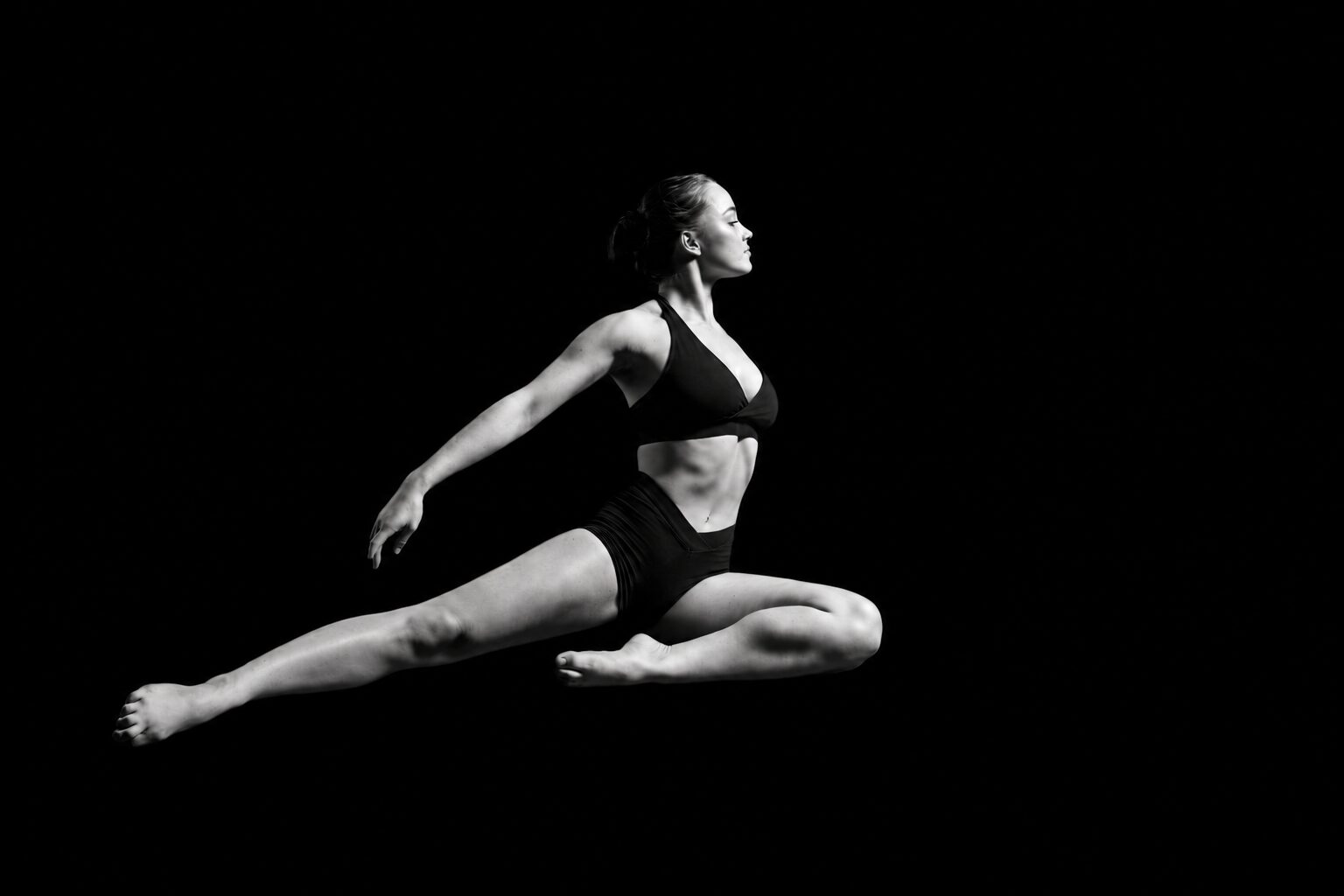
Perhaps you can already do the splits with ease, but you’re still struggling to land that high extension or a big jump like a grand jeté. This is where strength becomes your best friend. A grand jeté demands genuine muscular strength to lift you off the ground and hold your legs in a split position, without any help from the floor.
If you’re unsure whether your body is ready for more advanced positions, our dance physiotherapy team can assess your strength, control and range together, rather than range alone.
Why Strength Training for Dancers Is Now Essential
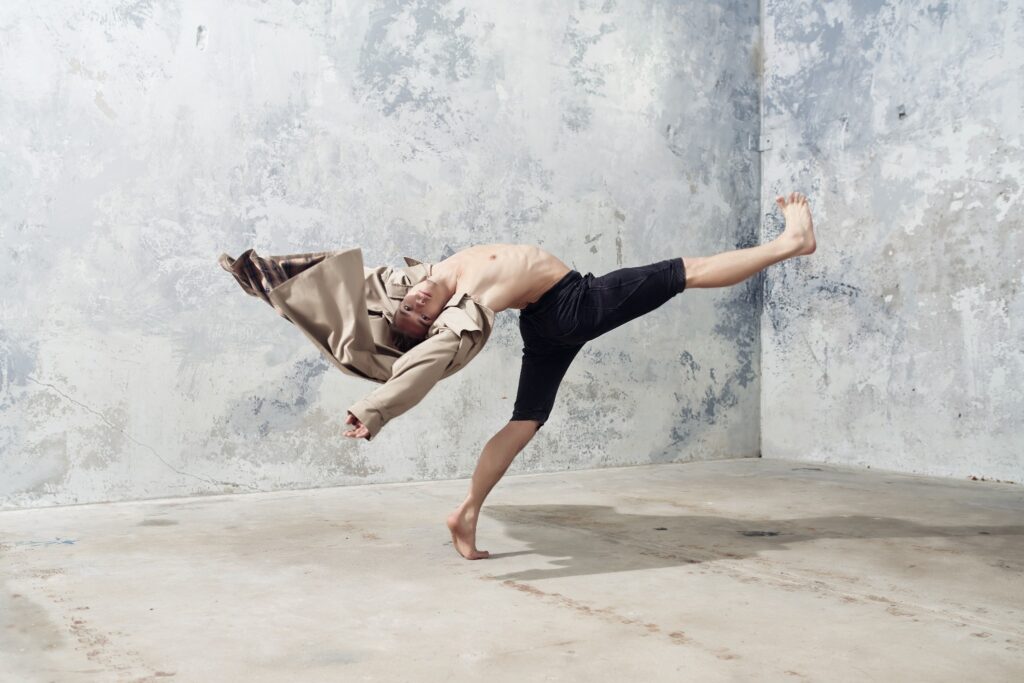
Considering this, the days of holding stretches to the point of mental and physical pain are gone. Strength training is now part of the weekly routine of many young and almost all professional dancers. Dance class alone isn’t enough to prepare the body for more challenging technical demands, and adding regular strength work may help you achieve a position or movement you haven’t managed before.
For a grand jeté, for example, it would be beneficial to strengthen your calves for push-off, your hip flexors for lift, and your hamstrings for length and control. In fact, research has found that a three-month strength program significantly improved hamstring flexibility in dancers, and a six-week strength and plyometric program improved jump height in ballet dancers.
However, you might be reading this and thinking, “I’m hypermobile, getting into flexible positions is easy for me.” If this sounds like you, strong muscles matter even more, because it’s your muscles that control your movement and protect your joints from injury.
Our Clinical Conditioning classes and Pilates for Dancers sessions are designed to build exactly this kind of functional dance strength, alongside your regular training.
Muscle Tightness Isn’t Always About Flexibility
Muscle tightness, not just a lack of flexibility, is a common complaint for many young dancers and athletes. If you’re young and still growing, your bones often grow faster than your muscles, which can make your muscles feel tighter than usual. Additionally, if you’re overtraining, your muscles might feel tight simply from fatigue, in which case extra rest may help your muscles recover their natural flexibility.
Often, tight muscles are also weak muscles, and by strengthening them, you may find your whole body starts to feel more mobile. This is particularly relevant for dancers managing repetitive movement patterns or lateral bias between their left and right sides, which can quietly increase injury risk over time.
Strength Is the Foundation, Stretching Is the Decoration
Being strong is the heart and foundation of everything you do as a dancer, so think of it as your cake. If that’s the case, then stretching, massage and foam rolling are simply the decorations on top. These tools and techniques are useful and can make you feel good after dance class. However, decorations are no fun without the delicious cake to go with them.
If you’re building a flexibility training program, pairing it with the right strength foundation is essential for safe, sustainable progress. For a deeper look at how to train flexibility without risking injury, read our guide on unlocking your flexibility potential safely.
Combining strength work with recovery tools such as remedial massage can also help manage the muscle fatigue that comes with a heavy training or rehearsal schedule. Our remedial massage practitioners can support this side of your training too.
Ready to Build a Stronger, More Resilient Body?
If you want to move beyond stretching alone and start training strength that supports your flexibility, our dance physiotherapy team in Sydney and Melbourne can help you build a program tailored to your body and your goals. Book an appointment or explore our dance physiotherapy services to get started.
Categories :
Performance Medicine