
Suite 3, Ground Floor, The Gateway,
312 St Kilda Road, Southbank, VIC, 3006



Minimising Pole Dance Overuse Injuries: Load, Recovery and Conditioning
By Sam Yeung
Pole is a form of performance physical activity that requires a combination of muscular strength, flexibility, acrobatic skill and dance on a vertical apparatus. With the growing popularity of pole dancing and pole sport, we’re seeing an increase in pole-related injuries in the clinic. This includes both acute injuries and pole dance overuse injuries. Unfortunately, these injuries can take polers away from their beloved sport and community for a period of time, which is disheartening. As physiotherapists working with performing artists, an important goal for us is to advocate for their health and performance. This helps ensure their longevity in their art form and sport.
This is why in this blog post, we want to discuss some ways to reduce the risk of overuse injuries in pole. Similar to other sports, it often comes down to a few key strategies: load management, recovery optimisation, and strength and conditioning.
Pole Load Management
You can define pole load as the intensity × duration × frequency of your pole training.
Appropriate load management simply means avoiding large or sudden increases in training load. This is especially true for spikes that your body isn’t prepared for. Sudden increases in pole-specific load are a common recipe for overuse injuries. For example, this might mean increasing class hours after a holiday break, or repeating the same choreography and tricks ahead of a competition. These spikes can raise your risk of injury, including injuries to your rotator cuff tendons.
Too much training, too fast, can lead to fatigue or injury, while too little training may result in slow or no progress. Finding the right balance allows polers to progress their skills gradually. At the same time, it gives their bodies the capacity to stay resilient and adapt to increasing demands.
If you’re managing a heavy competition or performance season, our sports physiotherapy team can help you plan a training load that matches your body’s current capacity.
Recovery Optimisation
On the flip side of training is recovery. Just like in other sports, rest is when the body adapts and gets stronger from training. It doesn’t get stronger during the training alone. Skipping adequate recovery time reduces the benefits of training and increases your risk of injury.
Simple ways to optimise recovery include:
- Scheduling regular rest days away from the pole
- Planning your training week to avoid repeatedly overloading one side of the body or one specific trick (which can be challenging during competition seasons)
- Timing your nutrition so your body is adequately fuelled before and after training
- Getting a good night’s sleep
- Incorporating appropriate cross-training into your training week
Additional recovery strategies that some polers may consider include compression garments, sports massage, or remedial massage. The right combination depends on individual needs and preferences.
Pole Strength and Conditioning
A common question is: “Won’t pole alone make me strong for pole?”
The answer is yes – just like any sport, pole training does build sport-specific strength. However, this may not always be enough, particularly with increased class frequency or more advanced skills.
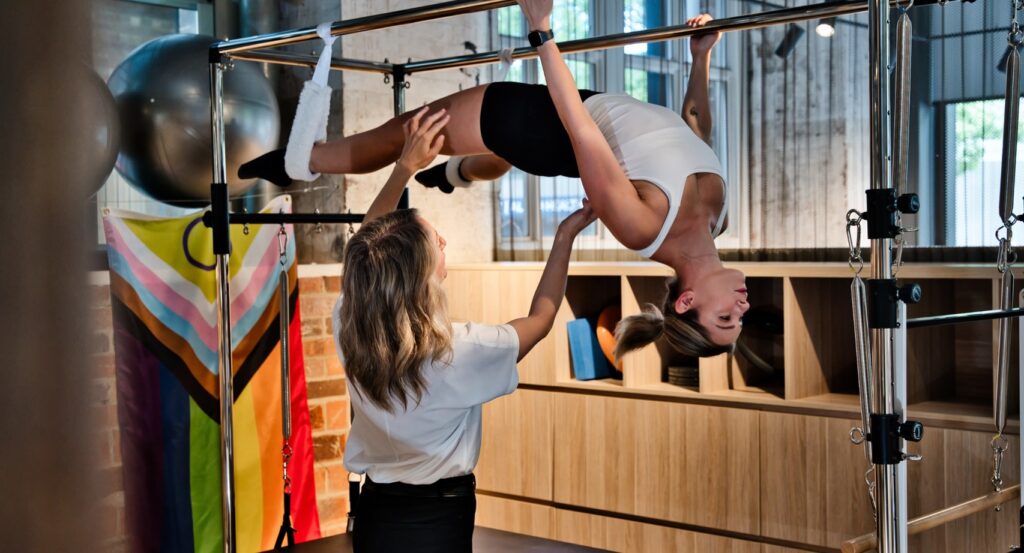
Strength training outside the studio allows polers to:
- Develop specific strength relevant to pole skills
- Increase the capacity of muscles and joints to tolerate load
- Increase the body’s capacity to try new moves that may require different strength and coordination patterns
- Reduce the risk of overuse injuries
- Address strength asymmetries, especially when one pushing or pulling side becomes dominant
Conditioning can take many forms, such as swimming, running, or floor-based dance, or any activity that elevates the heart rate for a sustained period. Improving aerobic capacity helps polers become more fatigue-resistant during choreography, classes, or long trick combinations. Reduced fatigue often means better technique, fewer errors, and a lower risk of injury.
Our Clinical Conditioning classes are designed to build the kind of targeted strength and joint control that supports pole training, alongside your regular studio sessions. Our physiotherapist Stephanie Zamoyski, also has a special interest in working with aerialists and pole dancers to prescribe individualised strength and conditioning programs. If you’re newer to the pole community, our blog on why pole is such an amazing sport to get strong in is a great place to start.
Keep These Strategies in Mind
Keep these strategies in mind when you enter the studio for a class or a training session to help you stay spinning on the pole, injury-free.
If your training load has changed recently, or you’re returning to pole after a break, our team can help you build a plan around your body’s needs. Book an appointment with our performing arts physiotherapy team to get started.
Resources
Małolepszy, M.; Kwas, K.; Defińska, K.; Smyczyńska, U. Epidemiology of Injuries in Polish Pole Dance Amateurs. Issue Rehab. Orthop. Neurophysiol. Sport Promot. 2022, 41, 7–13.
Szopa, A.; Domagalska-Szopa, M.; Urbańska, A.; Grygorowicz, M. Factors associated with injury and re-injury occurrence in female pole dancers. Sci. Rep. 2022, 12, 33.
Categories :
Performance Medicine