
Suite 3, Ground Floor, The Gateway,
312 St Kilda Road, Southbank, VIC, 3006



Sacroiliac Joint Dysfunction After Pregnancy: Where the Pain of Pregnancy Continues After Birth

Dr Brea Kunstler (Physiotherapist and Run Coach)
When you think of pain associated with pregnancy and childbirth people often think immediately of labour pain. Sure, labour hurts (A LOT!) but people who give birth often report having other pain, such as low back pain, that continues after childbirth. One type of musculoskeletal dysfunction that can contribute to this pain is sacroiliac joint dysfunction (SIJD).
Prevalence of Sacroiliac Joint Dysfunction After Pregnancy
However, SIJD is highly prevalent in post-partum women. Additionally, studies have reported that between 26% and 66% of post-partum women experience SIJD and enduring pain (Ali et al 2023, Ghodke et al 2017, Haq et al 2019). That’s a large number of people in pain!
What is the SIJ?
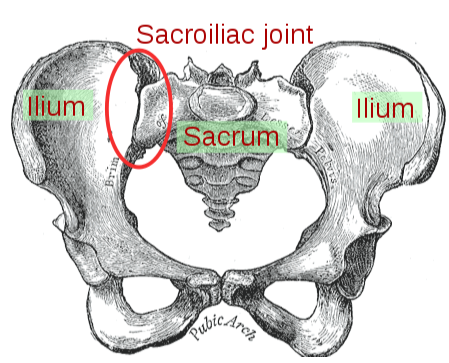
Image 1 credit: Physiopedia
Put simply, the SIJ is the joint between the ilium of the hip and sacrum, which is at the end of your spine. So this joint connects your pelvis to your spine (Image 1). This joint is a synovial joint, meaning it has some fluid in the joint, and a joint capsule surrounds that fluid. Because of this, the joint can move a little bit and can also become inflamed.
Furthermore, some movement is normal at this joint, but excessive movement isn’t. Excessive movement can occur during pregnancy when the pelvis tilts forward and the arch in the lower back increases due to the positioning of the growing uterus and laxity of once-stronger ligaments (Image 2). For example, this stress on the pelvis, and subsequently the SIJ, can be painful for some people and this pain can continue even after birth when, theoretically, the SIJ should revert to normal.
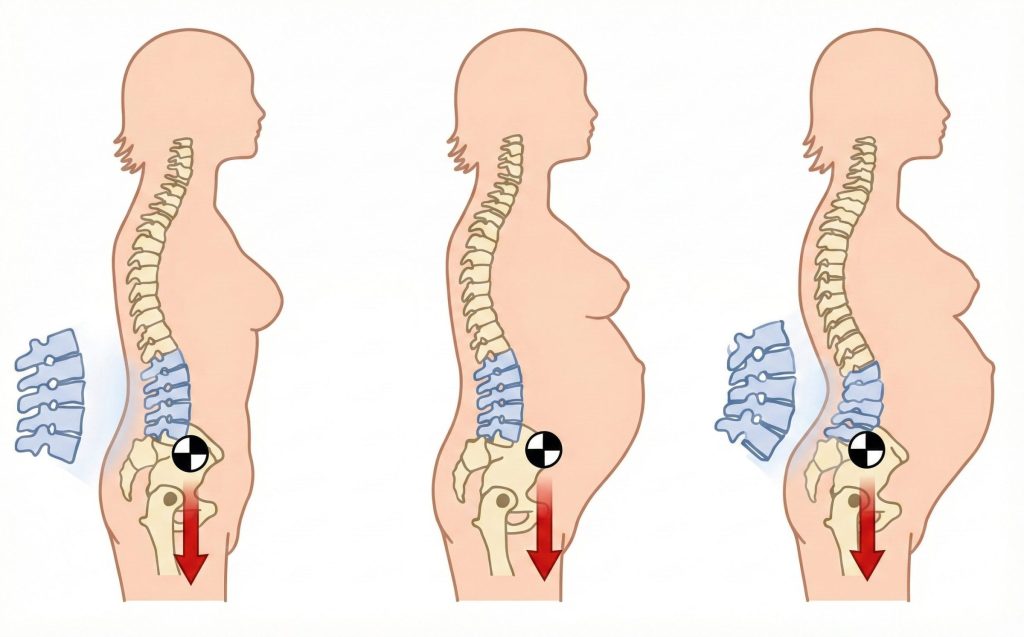
Image 2 credit: Physiopedia
What Does SIJD Feel Like?
SIJD can result in pain in the buttock, can be made worse when changing positions and typically makes your normal daily activities like walking, bending and climbing stairs uncomfortable to perform (Gusfa et al, 2021). SIJD might also irritate local nerves, making you feel pain and other uncomfortable sensations (such as cramping and tingling) down the leg on the same side as the pain. Some people might have SIJD on both sides of their pelvis, but it’s often only on one. In addition, the pain might be worse at the end of the day after doing lots of activities that aggravate SIJD (e.g. walking with a forward tilted pelvis, like during pregnancy).
What Works to Treat SIJD?
Therefore, physiotherapy (such as exercise, stretching and combination therapies [e.g. exercise with massage]) can work to improve SIJD, and the pain and disability associated with it (Sabrina et al, 2023). Mobilisation or massage alone can help improve the disability related to SIJD but the evidence for reducing pain is less certain (Trager et al, 2024). Adding support bands to these therapies can help to further relieve symptoms (Sward et al, 2023). These treatments can be performed during pregnancy.
Intra-articular injections, where substances are injected into the SIJ to relieve symptoms (e.g. platelet-rich plasma), require more research and development before we can say with confidence whether they work or not (Goodwin et al, 2023; Janapala et al, 2023). Cooled radiofrequency ablation, which aims to block the transmission of pain messages, also requires more research but existing research is promising (De Salvatore et al 2024). These treatments are not recommended in any population until more evidence is available, especially not the pregnant population.
Conclusion
SIJD can be painful and can significantly limit how a person moves and performs daily activities. Pain can be felt in the buttocks and can extend into the leg. Although this blog post focused on the pregnant population, SIJD can affect anyone. Physiotherapy, including exercises, manual therapy and support bands, can help relieve symptoms. Don’t wait to treat your symptoms. Come and visit us at Performance Medicine to get your treatment plan started today.
References
Ali, H., Khalid, M., Azeem, M. S., Saleem, S., Asim, H. M., & Sadiq, S. (2023). Prevalence of Persistent Sacroiliac Pain Among Postpartum Women; A Cross-sectional Survey: Sacroiliac Pain Among Postpartum Women. The Healer Journal of Physiotherapy and Rehabilitation Sciences, 3(7), 710-716.
De Salvatore, S., Russo, F., Vadala, G., Pascarella, G., Papalia, G. F., Ambrosio, L., … & Denaro, V. (2024). Interventional treatments for low back pain due to sacroiliac joint dysfunction: a systematic review of the literature. European Spine Journal, 33(4), 1407-1423.
Ghodke, P. S., Shete, D., & Anap, D. (2017). Prevalence of sacroiliac joint dysfunction in postpartum women-a cross sectional study. Physiother Rehabil, 2(3), 149.
Goodwin, B., Averell, N., Al-Shehab, U., Ernazarov, A., Price, L., Choudhary, A., & Jermyn, R. (2023). Efficacy of platelet-rich plasma for sacroiliac joint dysfunction: a qualitative systematic review with pooled analysis. Regenerative Medicine, 18(6), 505-514.
Gusfa, D., Bashir, D. A., & Saffarian, M. R. (2021). Diagnosing and Managing Sacroiliac Joint Pain. American Journal of Physical Medicine & Rehabilitation, 100(4), e40-e42.
Haq, K., Arshad, K., Saleem, A., Kaur, J., & Tanweer, S. A. W. (2019). Prevalence of sacroiliac joint pain in postpartum women in different hospitals of Lahore: a cross sectional study. Pakistan Journal of Physical Therapy (PJPT), 03-06.
Janapala, R. N., Knezevic, E., Knezevic, N. N., Pasupuleti, R., Sanapati, M. R., Kaye, A. D., … & Manchikanti, L. (2023). Systematic review and meta-analysis of effectiveness of therapeutic sacroiliac joint injections. Pain physician.
Sabrina, S., Farooqui, S., Khan, M. A., Khan, A. A., & Khan, F. A. (2023). Effectiveness of Evidence Based Physical Therapy Management Approaches in Sacroiliac Joint Dysfunction: A Meta-analysis. J Coll Physicians Surg Pak, 33(5), 572-7.
Sward, L., Manning, N., Murchison, A. B., Ghahremani, T., McCaulley, J. A., & Magann, E. F. (2023). Pelvic Girdle Pain in Pregnancy: A Review. Obstetrical & gynecological survey, 78(6), 349-357.
Trager, R. J., Baumann, A. N., Rogers, H., Tidd, J., Orellana, K., Preston, G., & Baldwin, K. (2024). Efficacy of manual therapy for sacroiliac joint pain syndrome: a systematic review and meta-analysis of randomized controlled trials. Journal of Manual & Manipulative Therapy, 1-12.
Need some help achieving your running goals? Book a telehealth appointment with Performance Medicine’s exercise and run coach, Dr Brea Kunstler, to see how she can help you achieve your goals. She can provide a referral to a trusted shoe provider who will give you 10% off the RRP of your new shoes.
Categories :
Performance Medicine